

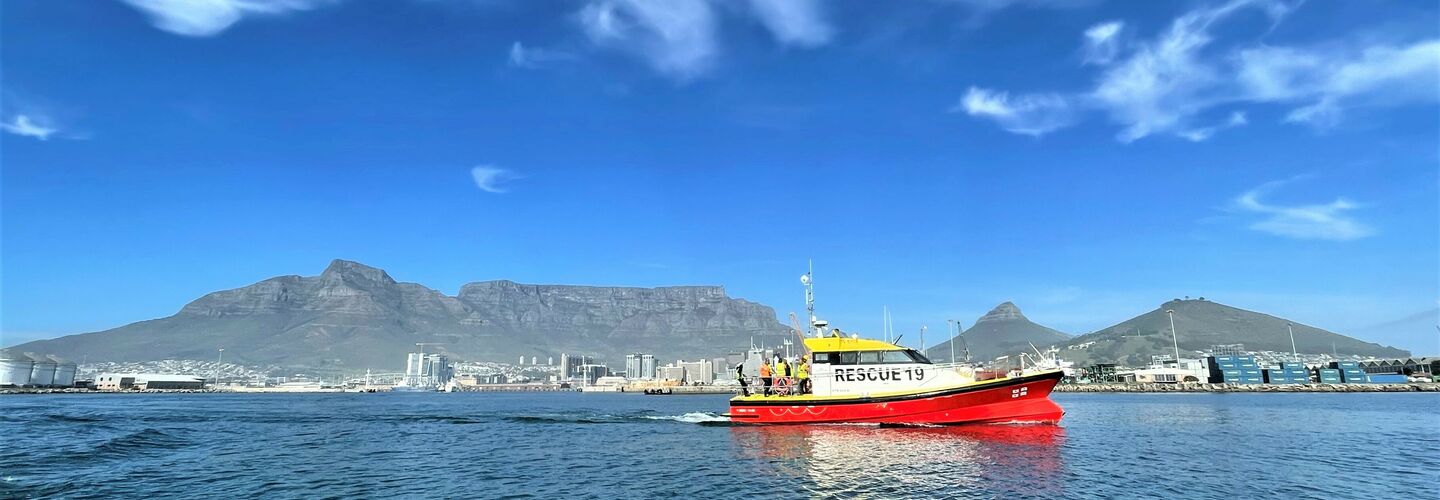
–Edited by Bev Mortimer– NSRI H/O in Cape Town has announced that its latest 14.8 m Offshore Rescue Craft (ORC) is en route at sea to Richards Bay in Kwa Zulu Natal , and is estimated to arrive tomorrow afternoon.
This new rescue craft, Rescue 19, is the 5th ORC added to the NSRI fleet to respond to emergencies far out sea.
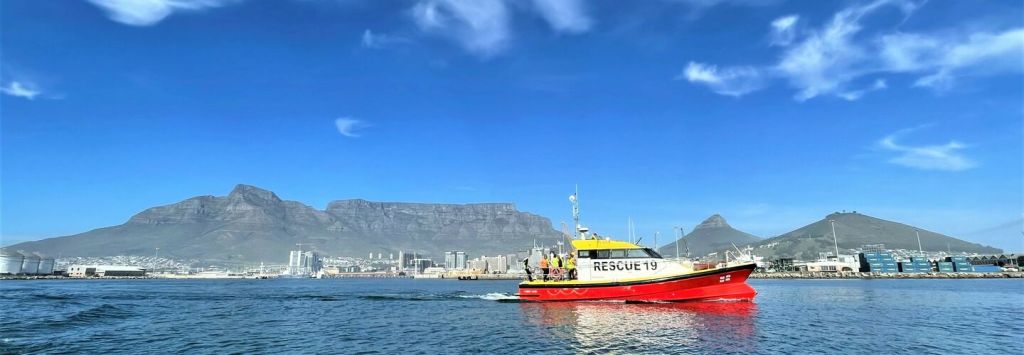
According to Brett Ayres, Director of Rescue Services at the NSRI, Rescue 19, will cover the northern coastline of KwaZulu Natal (KZN) up to the Mozambique Border and is currently travelling to Richards Bay, a distance of 1068 nautical miles, equivalent to more than 1900 KM. The crew are averaging at about 38KM an hour and this ORC is travelling at sea as it is cheaper than road freight.
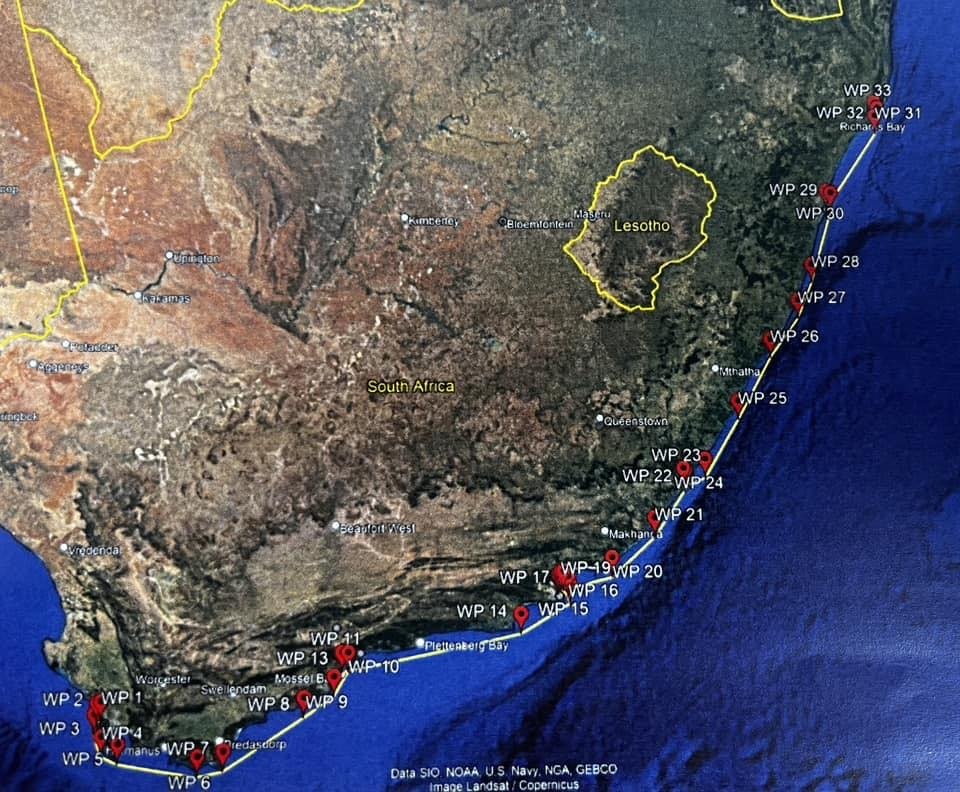
Map of the route for Rescue 19
Although most of the NSRI’s rescues are coastal and inshore, the coastline that the ORC will serve shares a boundary with Durban & Ballito stations at the Tugela River, which is the largest river in KZN. Brett says there is a need for this vessel in the area because the Richards Bay rescue base supports a lot of commercial shipping as well as yacht traffic. “The distances and local sea conditions of the area make it essential to have a class one boat.”

The first stop was at Mossel Bay to refuel and restock supplies. NSRI Training Manager Graeme Harding, the delivery skipper for the voyage, says: “Preparing for a trip of this nature requires a lot of planning. One needs to do a full passage plan, as well as consider logistics, weather and sea conditions.
“A passage plan is a process where you consider all the hazards and plot a safe passage, with all the different bearing’s, speeds and fuel consumptions for each leg. You also must make sure that there is enough fuel on the vessel which requires a few stops along the way.”
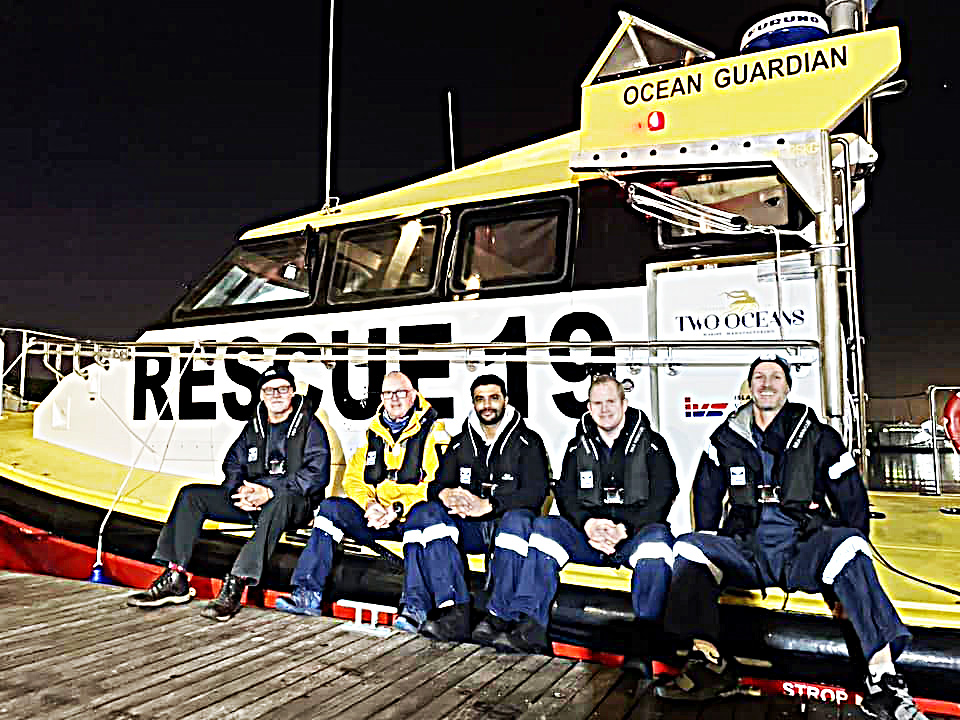
Rescue 19 volunteer NSRI crew members
After the stop in Mossel Bay the ORC will stop at Gqeberha, followed by East London, then Durban, and will then complete its last leg to its destination in Richards Bay. Two of these legs are quite long, which include the leg from Cape Town to Mossel Bay which is 14 hours, plus the one from East London to Durban.
Should anything go wrong there is a safety net around the coastline which the crew have considered. There is a passage plan left behind at the NSRI Volunteer Support Centre, where the location of the vessel is always known, and where all tracking systems are monitored – as is done for all NSRI vessels when they put to sea.
According to Brett, the ORC is estimated to arrive this weekend, on Saturday afternoon, at Richards Bay. “We will now be able to see a vast improvement in our capability to deliver rescue services in the Northern parts of KZN.
“As Richards Bay is our most Northern class 1 station, it is located at an essential strategic location to cover our coastline. We now have two ORCs in the province. The other one is in our Durban rescue base. KZN is now well covered.
“We can respond quickly and safely to a far larger coastal area. We will continue to do our job of saving lives on South African waters, and the ORC certainly makes this more effective,” Brett adds.
 St Francis Chronicle