

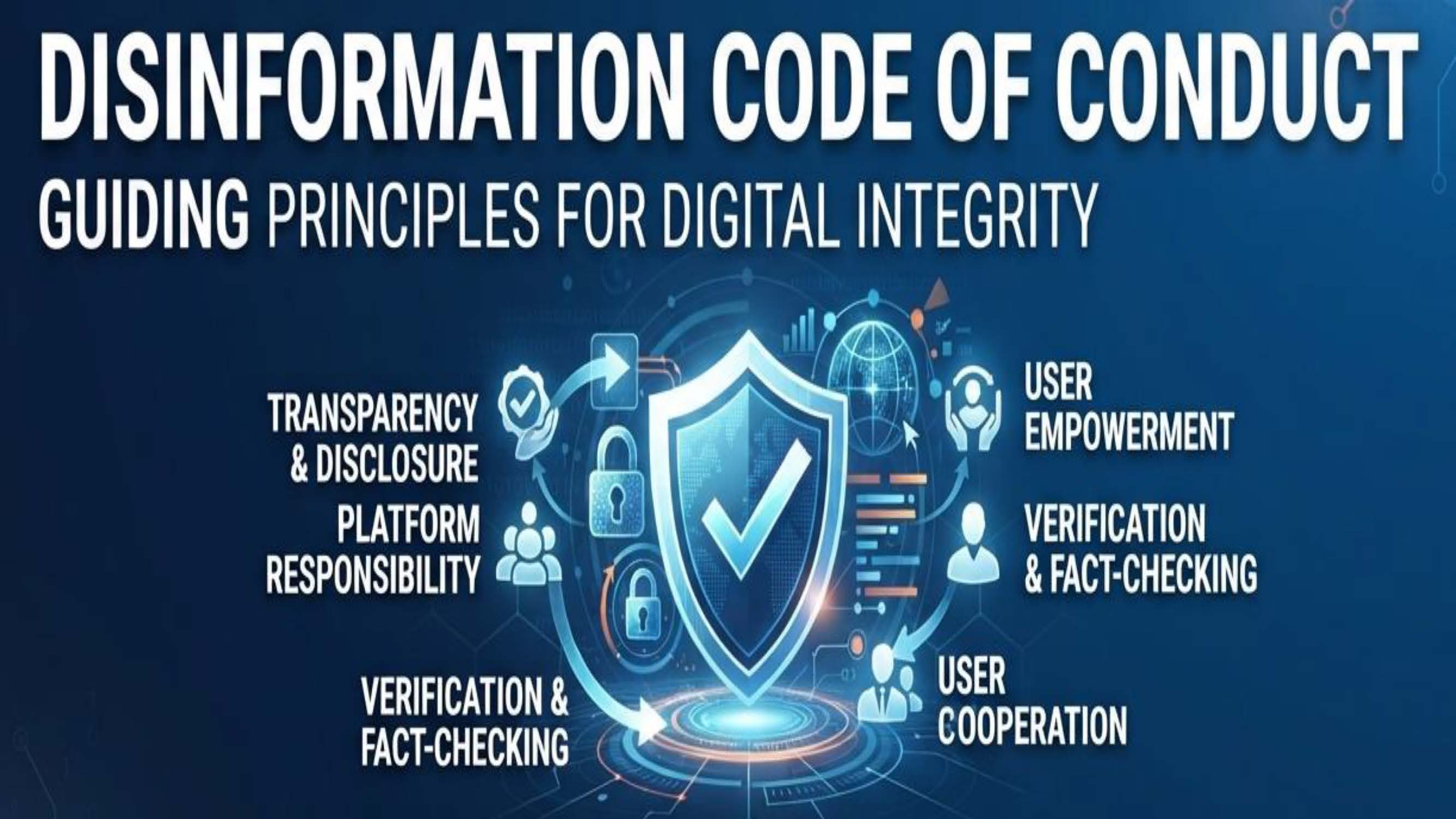
The IEC announced its new Electoral ‘Code of Conduct on Countering Disinformation’ to Eastern Cape media in East London the past two days ahead of the forthcoming South African Local General Elections (LGE) on 4 November next month.
The Electoral ‘Code of Conduct on Countering Disinformation’ serves as a legal framework by the Electoral Commission of South Africa (IEC).
This new Code of Conduct was announce on Monday this week at a two Day Media briefing at East London.
The Code is established under section 88 of the Local Government: Municipal Electoral Act, 2000.
The code is designed to protect democratic integrity without limiting constitutional freedoms.
The code therefore regulates the deliberate publication of false factual information by a candidate or party who knows it to be false.
Any contravention of the Code is therefore treated as a breach of the Electoral Code of Conduct and is subject to sanction under the Act. The sanctions range from fines and campaign restrictions to cancellation of a party’s registration in serious cases.
Reporting on disinformation is a actively shared responsibility in South Africa. Political parties, independent candidates, and online platforms actively cooperate to report and correct false news.
The code operates through four main pillars:
. Constitutional Rights Preservation
Safeguards the right to freedom of expression.
Protects healthy political participation.
Guarantees public access to information.
Balances free speech with democratic integrity.
2. Information Ecosystem Support
Establishes clear guidelines for responsible behaviour
Binds all candidates, parties, and stakeholders.
Promotes institutional transparency.
Holds participants accountable for actions.
Reinforces existing anti-falsehood laws
The Electoral Act 73 of 1998: Section 89 strictly prohibits making false
statements to disrupt or influence an election, change election results, or trick voters
The Electoral Code of Conduct: Map to Schedule 2 of the Electoral Act, this code forces all registered political parties to publicly condemn and avoid spreading false, defamatory, or inflammatory allegations about their opponents.
The Cybercrimes Act (Act 19 of 2020): This law criminalizes the intentional distribution of harmful data messages, malicious fabrications, or digital content meant to incite violence or damage property.
Explicitly prohibits intentional election disinformation.
Targets malicious, coordinated online manipulation.
Fosters a diverse media environment.
Supports the flow of accurate data.
Builds public resilience against manipulation.
Ensures a credible voting atmosphere
3. Standards of Conduct for Political Actors
Political Representatives and organizations hold significant public influence and are therefore required to adhere to ethical communication in order to ensure information integrity.
Commit to Truthfulness: Verify the accuracy of all content before public dissemination
Avoid Deceptive Media: Pledge not to create, use, or circulate manipulated media, including AI-generated “deep fakes”.
Clearly Label AI Content: Mark any authentically created synthetic media or AI-assisted content with highly visible disclosures.
Denounce Harmful Campaigns: Publicly reject third-party disinformation campaigns that falsely benefit their own campaign or attack opponents.
Promote Clean Campaigns: Instruct all participants, volunteers, and digital agencies to strictly avoid coordinated inauthentic behavior.
Lead Prompt Corrections: Issue, transparent retractions against any campaign that inadvertently spreads false or misleading information.
4. Measures to prevent, detect and respond to disinformation in the digital environment
Mandatory Reporting: Political parties and candidates must report all suspected online disinformation to the IEC’s complaints mechanism: (Real411 ) within 36 hours. https://real411.org.za/elections.
Transparent Advertising: All digital political adverts must explicitly state the political party or candidate responsible for distributing the advert.
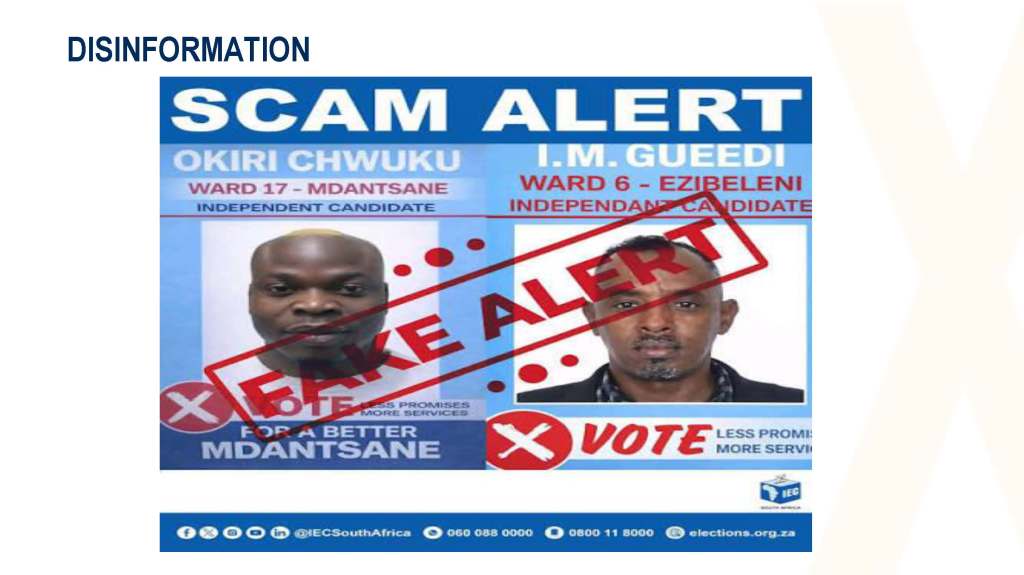
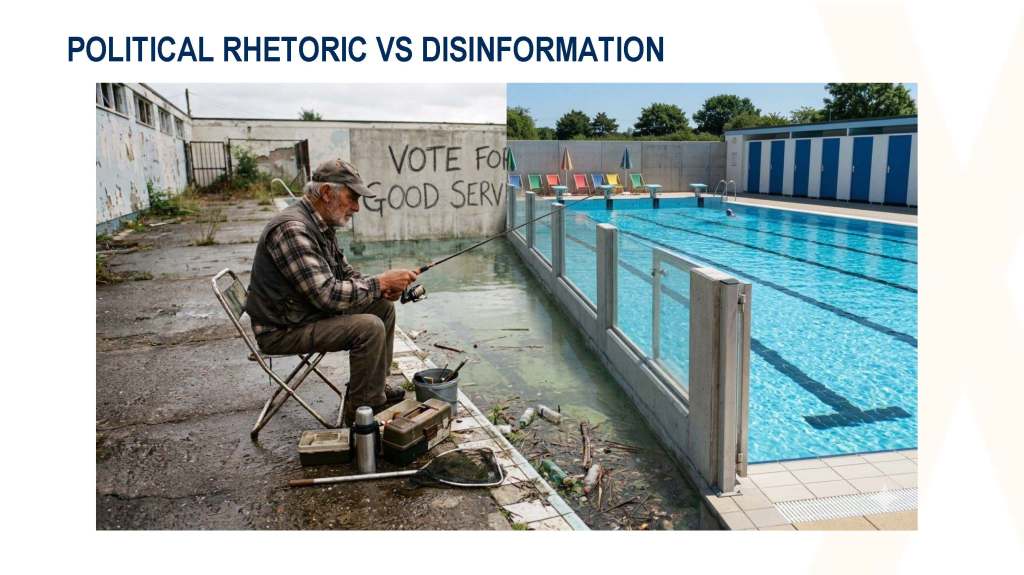
AI Disclosure: Any synthetic or AI-generated campaign content must be clearly marked and “white-labelled” to prevent public confusion. (Photo examples)
Data Security: All political actors and organisations must implement strict digital security safeguards such as cybersecurity to protect personal and confidential data from breaches.

