

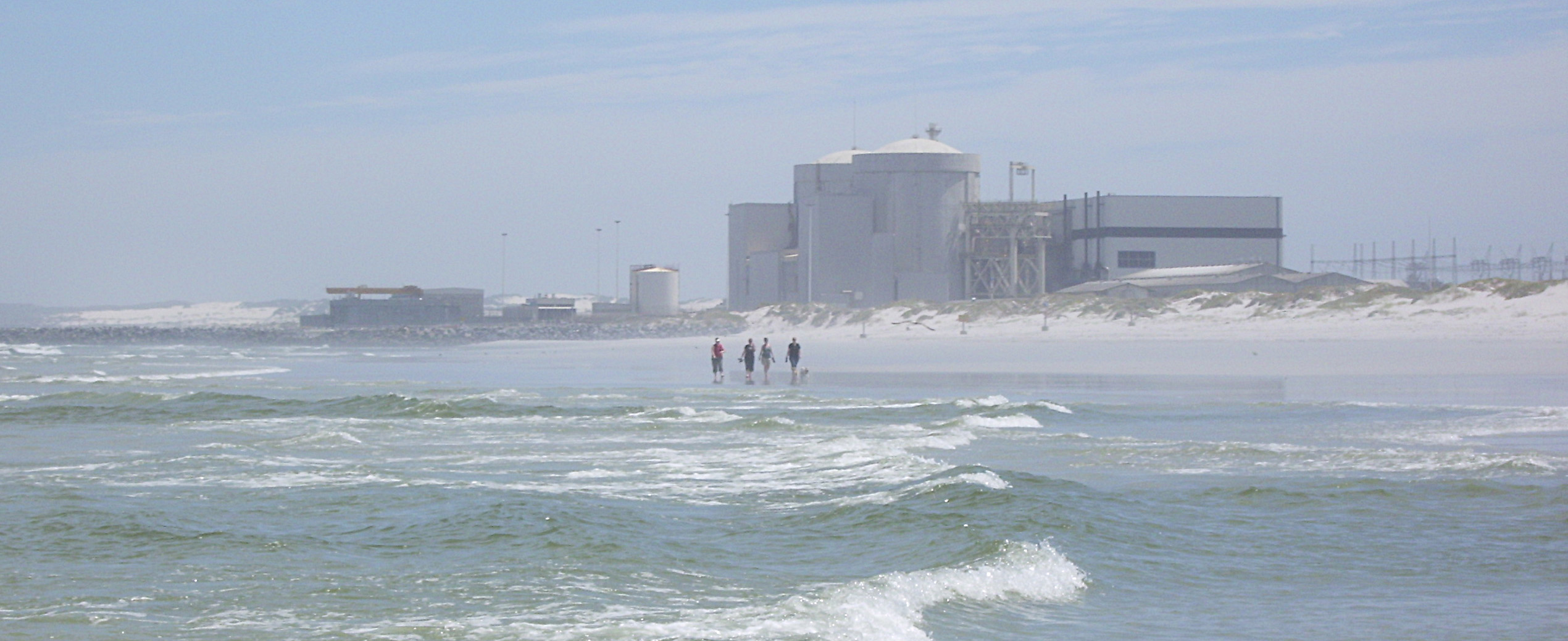
Edited by Bev Mortimer Eskom and its independent environmental consultants, WSP Group Africa, is handling a Scoping and Environmental Impact Reporting process for a proposed new nuclear power station with a capacity of up to 5,200 MW at Thyspunt.
The main objectives of the scoping phase are to:
* Motivate the need and desirability of the project;
* Identify potential environmental, social, economic and cultural impacts (positive and negative); and
* Determine the scope of detailed specialist studies required for the full Environmental Impact Assessment (EIA) phase.
Thyspunt is currently Eskom’s preferred site, with Bantamsklip in the Western Cape as an alternative. Public meetings were held in the Kouga area last month, April 2026 to present the Draft Scoping Report and gather resident comments. The public comment period has been extended to 25 May 2026.
The subject of ‘Thyspunt’ has always led to diverging views, intense discussions and arguments, St Francis Chronicle is providing most of the locals’ viewpoints ‘for’ and ‘against’ below:
For & Against viewpoints and beliefs:
* Residents Against: Critics raised several serious local concerns:
Safety and evacuation risks as in nuclear accident, radiation could potentially reach St Francis Bay in about 8 minutes and Jeffreys Bay in 20 minutes. Residents need to know how more than 10 000 people in the St Francis area could be safely evacuated in such a short time.
Impact on marine life and the calamari (chokka) industry: Eskom plans to discharge 6 to 10 million cubic metres of brine, heated water and construction spoil into the ocean. This has sparked fears of damage to calamari (chokka) breeding grounds.
Cultural heritage: Thyspunt has a Khoi-San history, including old fishing sites and burial grounds and si cn be considered as a potential National Heritage site.
Infrastructure strain: About 1770 heavy truck trips a day could be travelling on the rods there for about 10 years and this could damage the R102 and R330
Water security concerns: Residents fear major strain on already limited water resources, threatening farms, irrigation, livestock and domestic water supply in this water-scarce region, from thousands of additional workers.
Temporary jobs and social impact: Even though construction will create jobs, many fear the jobs will be short-term only. The nuclear plant will need and use highly skilled workers. This will mean post-construction that there could be limited jobs for local residents. Plus there will be increased housing, services and living conditions.
Residents For:
Supporters of the project argue that national and regional benefits outweigh risks: Reliable electricity and base-load power will end the real threat of load-shedding returning again – after several years of load-shedding that negatively affected businesses and residents. Koeberg will some time end its life-term and this could lead to load-shedding.
Nuclear will provide cleaner energy production, plus low carbon emissions and will also replace coal-fired power stations.
There will be long-term economic growth with the development of new industries and the Eastern Cape will have a stable economic hub.
There will be more and diverse shops, plus important but currently missing things like hospitals, more clinics, churches etc.
Evidence from Koeberg, which has operated safely for more than 40 years near Cape Town, are an example a nuclear facility that is managed responsibly and safely.
Informal residents, plus several in the formal areas of St Francis say there will be more jobs for them. People in the formal areas love the area but cannot get a job for their line of work and have to leave the area.
Strict Protective Action Zones could help control unplanned development and could protect long-term property values.
There could well be training programmes and skill development workshops locally to assist those unable to work for the power station post construction.
Comment from Trudi Malan, Co-chairperson of the Thyspunt Alliance:
While the meetings formed part of the Draft Scoping phase for the proposed Thyspunt Nuclear Development, community members and organised civil society groups, including the Thyspunt Alliance, have expressed deep concern about both the substance and structure of the engagement.
The Thyspunt Alliance has reaffirmed its commitment to follow due process meticulously. Trudi Malan, co-Ordinator for the Thyspunt Alliance says: “Despite our frustrations with the way the meetings were managed, we will continue to provide substantive, evidence-based input into the Environmental Impact Assessment (EIA), drawing on legal, scientific and community expertise.
A central concern raised by several community members is the apparent narrative framing of specialist studies, where conclusions seem to be presented as settled fact rather than as outcomes derived from transparent scientific analysis.
The presentations focused heavily on how nuclear energy works in general, with minimal attention given to the actual, on-the-ground impacts that such a development would have on local livelihoods, ecosystems, heritage, and infrastructure.“
– (Note: First published in St Francis Chronicle newspaper May 2026, currently out on shelves)

